Logistics · Scale-up · Vancouver region
Single source of truth for fleet operations
The problem: A Canadian logistics scale-up ran dispatch, billing and maintenance in three systems that disagreed about vehicle availability. Monday morning meetings opened with four versions of "how many trucks are actually on the road." Finance exported CSVs; ops lived in a legacy TMS; maintenance logged work orders in a spreadsheet nobody audited.
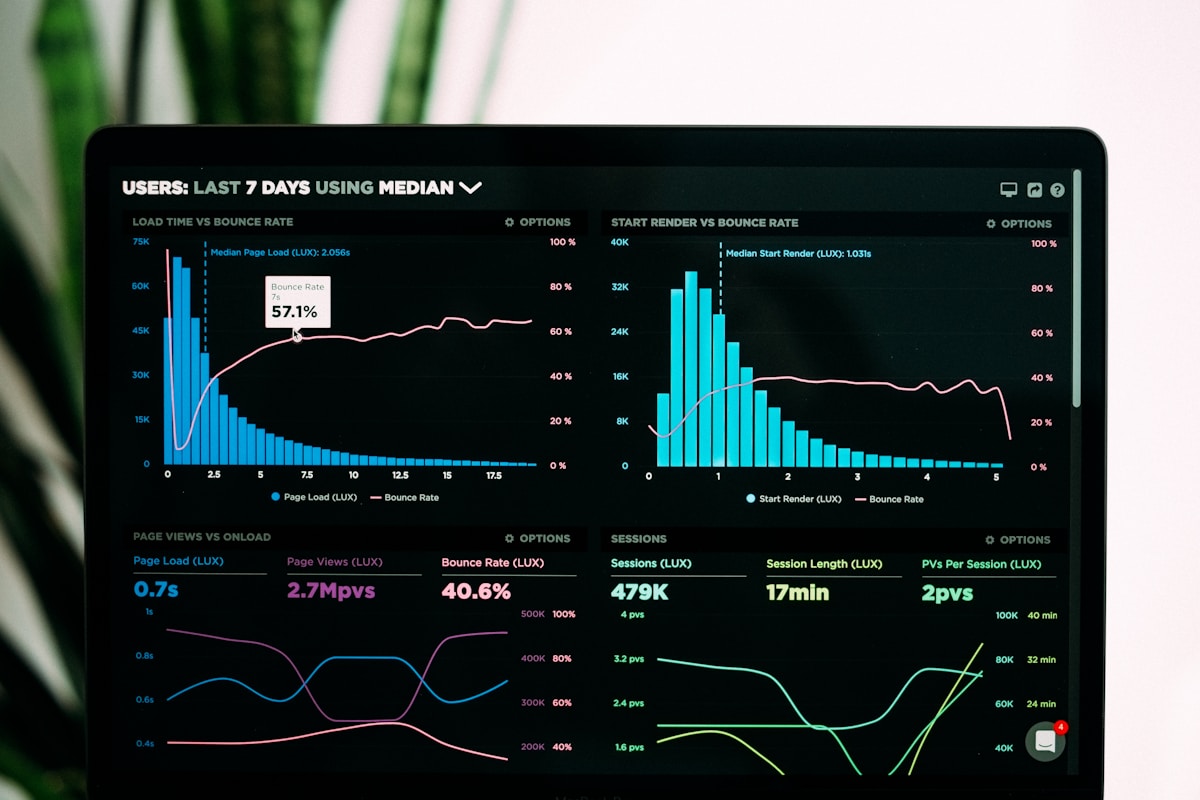
The idea: Forge a governed warehouse with batch and streaming pipelines, data quality checks at each ingest boundary, and a decision dashboard ops managers would open without being told. Data contracts defined which system owned which field — and what happened when sources conflicted.
What we built: Twelve-week engagement — discovery, pipeline build, warehouse model, dashboard layer and DataOps handover. API integration connected TMS, billing and maintenance feeds. Exception queues routed conflicts to a human coordinator; automation handled routine reconciliation. Predictive analytics for maintenance windows was scoped as phase two.
Human in the loop: Dispatch supervisors approve route exceptions. No autonomous routing without review.
Illustrative outcome: reconciliation time dropped from hours to minutes on routine days; exception volume surfaced data-contract gaps that were fixed upstream.

Discovery workshop · source-system mapping
Dashboard workshop · decision-surface design
Retail · Enterprise · National
AI-ready retrieval for support knowledge
The problem: A national retailer's support inbox flooded every Monday with policy questions agents answered differently depending on which document they found first. An internal LLM pilot cited outdated return rules in front of customers. Leadership wanted generative AI assistance — but the corpus underneath was a mess of PDFs, wikis and regional exceptions.
The idea: Build retrieval-augmented generation (RAG) foundations with chunking, metadata contracts, evaluation harnesses and prompt engineering guardrails — before anyone promised the model would be accurate.
What we built: AI-ready data layer ingesting policy documents with version tracking. Embedding pipeline, retrieval index and benchmark question set from real support tickets (anonymized). Model evaluation tracked citation accuracy and inference latency. Refund edge cases routed to human review — automation handled FAQ-tier queries only.
Human in the loop: Senior agents review any answer involving refunds over a threshold or regional regulatory exceptions.
Illustrative outcome: citation accuracy on benchmark set improved substantially; hallucination rate on policy questions dropped — outcomes vary by corpus cleanliness and adoption.
Fintech · Scale-up · Canada
Risk-ops warehouse for transaction monitoring
The problem: A fintech's risk-ops group queried production replicas because their "official" warehouse lagged by eighteen hours. Analysts built shadow tables in personal schemas. Regulatory reporting pulled from yet another export. Nobody trusted the overnight batch — and nobody wanted to be the person who discovered why.
The idea: Rebuild the warehouse model with streaming ingest for high-priority events, data quality checks on transaction integrity, and a semantic layer risk analysts could query without fear. MLOps hooks for the fraud-scoring model's feature freshness.
What we built: Sixteen-week project — governance review, pipeline re-architecture, warehouse layers, analyst-facing semantic views and monitoring dashboards. Machine learning feature store connected to the fraud model with drift monitoring. PIPEDA-aligned access controls for Canadian customer data.
Human in the loop: Analysts investigate flagged transactions; the model surfaces candidates — it does not auto-freeze accounts without review.
Illustrative outcome: warehouse freshness improved to near-real-time for priority streams; analyst shadow schemas retired over three months.
Healthcare admin · Enterprise · Western Canada
Scheduling analytics across fragmented clinics
The problem: A healthcare administration group managed scheduling data across clinics that each customized their EMR exports differently. Leadership wanted a regional utilization dashboard; every attempt produced a number someone on the floor disputed.
The idea: Standardize ingest with clinic-specific data contracts, validate against agreed definitions of "appointment" and "no-show," and publish a dashboard with drill-down to source records for auditors.
What we built: Ten-week pilot — discovery with clinic administrators, pipeline build for three initial sites, warehouse model and executive dashboard. Automation for nightly loads; clinic managers validate anomalies weekly. Scope expansion to remaining sites documented as phase two with separate CAD quote.
Human in the loop: Clinic managers confirm flagged anomalies before they enter regional rollups.
Illustrative outcome: regional leadership reported using one dashboard for quarterly planning for the first time in two years.
Manufacturing · Mid-market · BC
IoT sensor pipeline for production-line quality
The problem: A BC manufacturer installed sensors on production lines but stored readings in siloed databases with no common timestamp alignment. Quality engineers exported CSVs for weekly reviews; predictive maintenance was a slide in a deck, not a system.
The idea: Streaming pipeline from sensor gateways into a time-series-aware warehouse layer, with data quality checks on gap detection and dashboard for line supervisors.
What we built: Twelve-week engagement — sensor ingest architecture, streaming pipeline, warehouse storage, supervisor dashboard and alert routing. Computer vision integration for defect imaging scoped separately. Model training for anomaly detection delivered as pilot with evaluation metrics — not guaranteed production accuracy.
Human in the loop: Line supervisors investigate alerts; automated shutdown requires explicit client policy approval we did not assume.
Case study notice: These stories describe past Data Forge client work in anonymised form. Metrics are illustrative and depend on data quality, scope, infrastructure and team adoption. We do not guarantee similar outcomes. Data pipelines and AI systems require human oversight. Not a course, income scheme or data broker.
Book a data assessment
Describe the seam you need refined — we will scope honestly.